Home Battery and Powerwall Installation in New York
The Powerwall is the best known home battery, but it is one option among several. Here is how to judge which fits your house.
Choosing a home battery
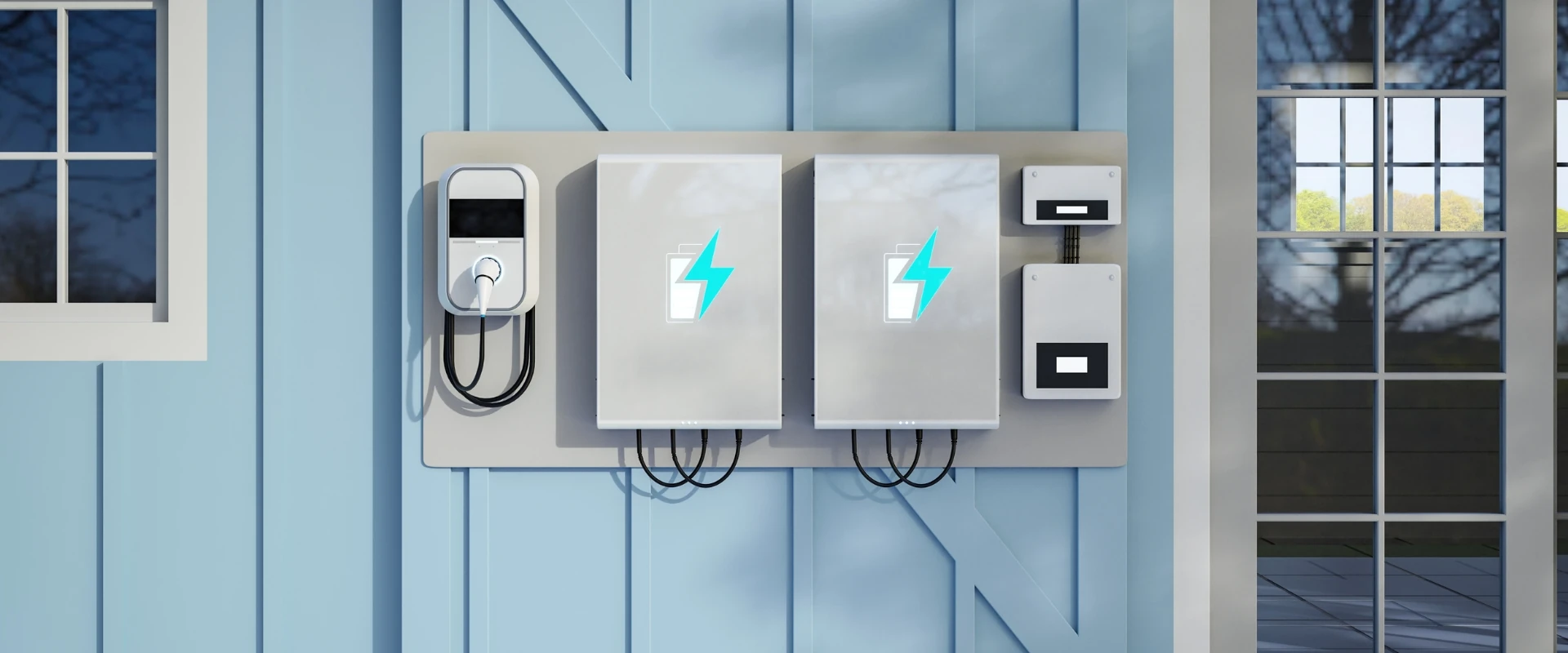
Tesla's Powerwall is the product most people have heard of, which makes it a useful starting point even if it is not where you end up. It is an integrated unit combining the battery, the inverter and the switching hardware in one wall mounted box, which is part of why it became the default reference in this category.
It is not the only credible option. Enphase, FranklinWH, SolarEdge and others make comparable systems, and the right answer depends on what inverter your solar uses, how much capacity you need, and what your installer is certified to fit. An installer certified on one platform will usually recommend it, which is worth knowing when you read a proposal.
We are independent and do not sell any of these. What follows is how to think about the decision rather than which brand to buy.
How the decision usually breaks down
- Capacity, measured in kilowatt hours. How much energy the battery holds. This determines how long you can run, and it is the number most directly tied to price.
- Continuous power output, measured in kilowatts. How much you can run at once. A battery with plenty of stored energy but modest output still cannot start a well pump and an air conditioner together.
- Whether it can stack. Most systems allow multiple units. If whole home backup is the goal, you are often looking at more than one.
- Integration with your existing solar. AC coupled systems retrofit onto almost anything. DC coupled systems can be more efficient but are fussier about what they pair with.
- Installer certification. Manufacturers restrict who can install and warrant their equipment. This narrows your practical options more than the spec sheets do.
Questions worth asking before you sign
Which circuits will actually be backed up?
Ask for the list, in writing. This is the single most common source of disappointment after a battery is installed.
What happens when the battery runs out mid outage?
If you have solar, the battery recharges the next day. Understanding that cycle matters for a multi day outage.
What does the warranty actually cover?
Look for the retained capacity figure at end of warranty term, not just the number of years. They are different promises.
Who services it if it fails?
The installer, the manufacturer, or neither. Worth knowing before you need the answer.
Is the quoted price for one unit or the whole system?
Proposals sometimes quote the battery and treat the electrical work, subpanel and switching as separate lines. Compare like for like.
Three steps, and you can stop at any of them
Tell us about your property
Your address, roughly what you pay for electricity, and your roof type. It takes about a minute, and every question beyond the basics is optional.
We refer you to one installer
One company that works in your county and knows your utility's interconnection process. Not a lead pool, and not six companies calling you.
Free consultation and a written proposal
They assess your roof, your usage and your utility, then put numbers on paper. No obligation at any point, and no payment is ever taken through this site.
How to check any solar contractor
This is a new site with no customer reviews, so we are not going to show you any. What we can do is tell you exactly what to verify about whoever contacts you, and where to look it up. That applies to the installer we refer you to and to every other quote you get.
NABCEP certification
The North American Board of Certified Energy Practitioners is the industry standard credential for solar installers. It certifies the individual professional who holds it, not the company, so a firm advertising it may have one certified person and twenty who are not.
How to check. Ask which named individual holds it, then search that name in the directory.
Search the NABCEP directoryNYSERDA participation
Registration in the state's NY-Sun programme. This one is not a nice to have: the New York State incentive is only available through an approved contractor, so using an unregistered installer forfeits it. Some also hold the Quality Solar Installer designation, which requires at least 12 NY-Sun projects in the past year and an average of 4 out of 5 on NYSERDA's own field inspections.
How to check. Search the company name in NYSERDA's list before you sign anything.
Check NYSERDA's contractor listLicensing and insurance
Appropriate electrical licensing for the work, plus general liability and workers compensation cover. A contractor without workers compensation can leave you personally exposed if someone is injured on your roof.
How to check. Ask for certificates of insurance naming you, and check the licence with your town or county before work starts. Do not accept a policy number alone.
Local experience
Interconnection is where most New York solar timelines slip, and it is handled very differently by Con Edison, National Grid, NYSEG, RG&E and PSEG Long Island. Permitting varies again by town.
How to check. Ask how many systems they have energised on your specific utility in the past year, and for two addresses in your county you can drive past.
NY Solar Finder is operated by RBR Growth Consulting. We are not a solar installer, we hold no industry certification, and we do not guarantee the credentials of the company that contacts you. We name these standards, and link to the bodies that issue them, so that you can check that company yourself before you sign anything.
Questions we get asked about this
No, a battery can be installed on its own and charged from the grid, which still gives you backup power. It just will not recharge itself during a long outage the way a solar paired system does.
It depends on your house and what you run. Homes with electric heating, electric ranges or central air conditioning typically need more capacity than a single unit provides. An installer should model this from your actual usage rather than estimating.
It is a well regarded product with a mature install base, but so are several competitors. The more useful question is which system your installer is certified on, whether it suits your existing inverter, and whether the capacity and output match what you want to back up.
It can, by storing your midday production for evening use rather than exporting it. In New York, where Phase One Net Metering credits exports at the full retail rate, that financial benefit is weaker than in states with less generous export rates. For most New York households, backup is the main reason to buy one.
Usually a garage or utility room, occasionally an exterior wall. Siting has to meet fire code and manufacturer temperature requirements, and some New York jurisdictions have specific rules about batteries inside dwellings.
Related reading
Find out what this would look like on your property
One local installer, one free consultation, one written proposal. Your details are never sold.