
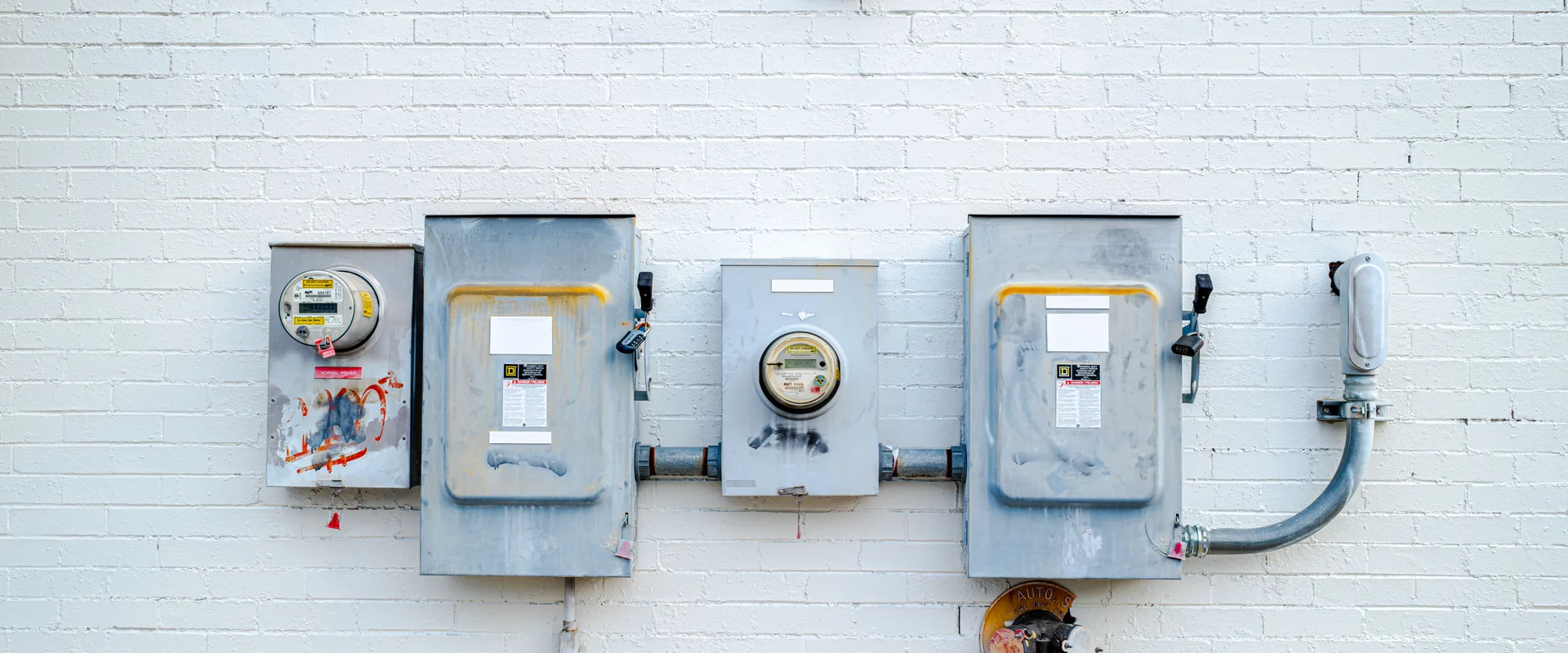
Net Metering in New York, Explained
Net metering is what turns the power your roof makes at noon into a credit you use at night. Across most of New York you currently get to choose between two versions of it, and one is usually better. On Long Island the rules are different.
In the six investor-owned utility territories, residential solar customers can choose Phase One Net Metering, which credits exported electricity at the full retail rate, or the VDER Value Stack tariff. For most households Phase One is worth more. Long Island is administered separately by PSEG Long Island and the options there differ. An eligible system keeps its arrangement for 20 years from interconnection. Most systems interconnected from 2022 onward also pay a monthly Customer Benefit Contribution charge.
The problem net metering solves
Your panels produce most around midday. Most households use most electricity in the morning and evening. Without some mechanism to reconcile those, solar would only ever offset what you happen to be using at the moment the sun is out, which is a fraction of your bill.
Net metering fixes that. Surplus electricity flows to the grid and your meter records it. You draw it back later as a credit. In effect the grid acts as a battery you do not have to buy.
Phase One Net Metering, the one most people want
Under Phase One, exported electricity is credited at the full retail rate. A kilowatt hour you send out is worth a kilowatt hour you pull back. That is the most generous arrangement available and it is why it is being phased out for new entrants over time.
Credits roll from month to month, which matters in New York: your system will overproduce in summer and underproduce in winter, and the annual cycle is what makes that work rather than the monthly one. What happens to any credit still unused at the end of a cycle is set by your utility's own tariff, so check that rather than assuming a refund.
The important part: a system interconnected today locks in its arrangement for 20 years. Whatever happens to the programme for future customers does not retroactively change yours.
VDER, the alternative
VDER, the Value of Distributed Energy Resources, is also called the Value Stack. Instead of crediting at retail rate it values your exports on five components: locational marginal price, capacity, environmental value, demand reduction value, and locational system relief.
It is a more economically precise mechanism and for most residential customers it produces less value than full retail crediting. VDER tends to suit larger systems and commercial sites in constrained parts of the grid, where the locational components pay well.
For a typical New York home, Phase One is normally the better choice while it is available. Ask your installer to model both rather than accepting a default.
The charge nobody mentions until the first bill
Is net metering going away?
New York has said it will transition away from traditional net metering toward VDER. No statewide end date has been announced, and availability is set utility by utility, so confirm the current position with yours before you sign.
You will find solar sites claiming a specific deadline in order to create urgency. We are not going to do that, because the date does not exist. What is true is that today's interconnections lock in for 20 years, so acting sooner secures the current arrangement for two decades. That is a real reason to move, and it does not require inventing a deadline.
What this means for batteries
This is the part that surprises people. Because Phase One credits exports at full retail rate, storing your surplus in a battery instead of exporting it saves you very little. The grid is already giving you full value.
So in New York, a home battery is mainly a backup power purchase rather than a savings one. That is a perfectly good reason to buy one, particularly on a well or in an outage-prone area. It is just a different reason than the one usually pitched.
Questions people ask about this
Your solar system sends surplus electricity to the grid and your utility credits you for it. You draw that credit back when your panels are not producing, such as at night. It lets a system offset your whole bill rather than only what you use while the sun is shining.
For most New York households, Phase One. It credits exports at the full retail rate, where VDER values them on five separate components that usually total less for a residential system. VDER tends to favour larger systems in constrained parts of the grid. Ask your installer to model both for your property.
A system interconnected today locks in its arrangement for 20 years. Changes to the programme for future customers do not retroactively alter an existing agreement.
Not normally. Credits offset your future consumption rather than being paid out. Credits roll month to month against a twelve month true-up, which is what allows summer surplus to cover winter shortfall.
A monthly per-kilowatt charge that applies to most systems interconnected from 2022 onward, under either crediting programme. Earlier systems are generally grandfathered out, and the rate is set by each utility. It is modest, but it should appear in any honest savings projection. Check your own utility's current tariff for the figure that applies to you.
No end date has been announced. New York has stated an intention to move toward VDER over time, but anyone quoting you a specific deadline is inventing it. Today's interconnections lock in for 20 years either way.
How to check any solar contractor
This is a new site with no customer reviews, so we are not going to show you any. What we can do is tell you exactly what to verify about whoever contacts you, and where to look it up. That applies to the installer we refer you to and to every other quote you get.
NABCEP certification
The North American Board of Certified Energy Practitioners is the industry standard credential for solar installers. It certifies the individual professional who holds it, not the company, so a firm advertising it may have one certified person and twenty who are not.
How to check. Ask which named individual holds it, then search that name in the directory.
Search the NABCEP directoryNYSERDA participation
Registration in the state's NY-Sun programme. This one is not a nice to have: the New York State incentive is only available through an approved contractor, so using an unregistered installer forfeits it. Some also hold the Quality Solar Installer designation, which requires at least 12 NY-Sun projects in the past year and an average of 4 out of 5 on NYSERDA's own field inspections.
How to check. Search the company name in NYSERDA's list before you sign anything.
Check NYSERDA's contractor listLicensing and insurance
Appropriate electrical licensing for the work, plus general liability and workers compensation cover. A contractor without workers compensation can leave you personally exposed if someone is injured on your roof.
How to check. Ask for certificates of insurance naming you, and check the licence with your town or county before work starts. Do not accept a policy number alone.
Local experience
Interconnection is where most New York solar timelines slip, and it is handled very differently by Con Edison, National Grid, NYSEG, RG&E and PSEG Long Island. Permitting varies again by town.
How to check. Ask how many systems they have energised on your specific utility in the past year, and for two addresses in your county you can drive past.
NY Solar Finder is operated by RBR Growth Consulting. We are not a solar installer, we hold no industry certification, and we do not guarantee the credentials of the company that contacts you. We name these standards, and link to the bodies that issue them, so that you can check that company yourself before you sign anything.
Related reading
See what solar would look like on your roof
One local installer, one free consultation, one written proposal. Your details are never sold.