
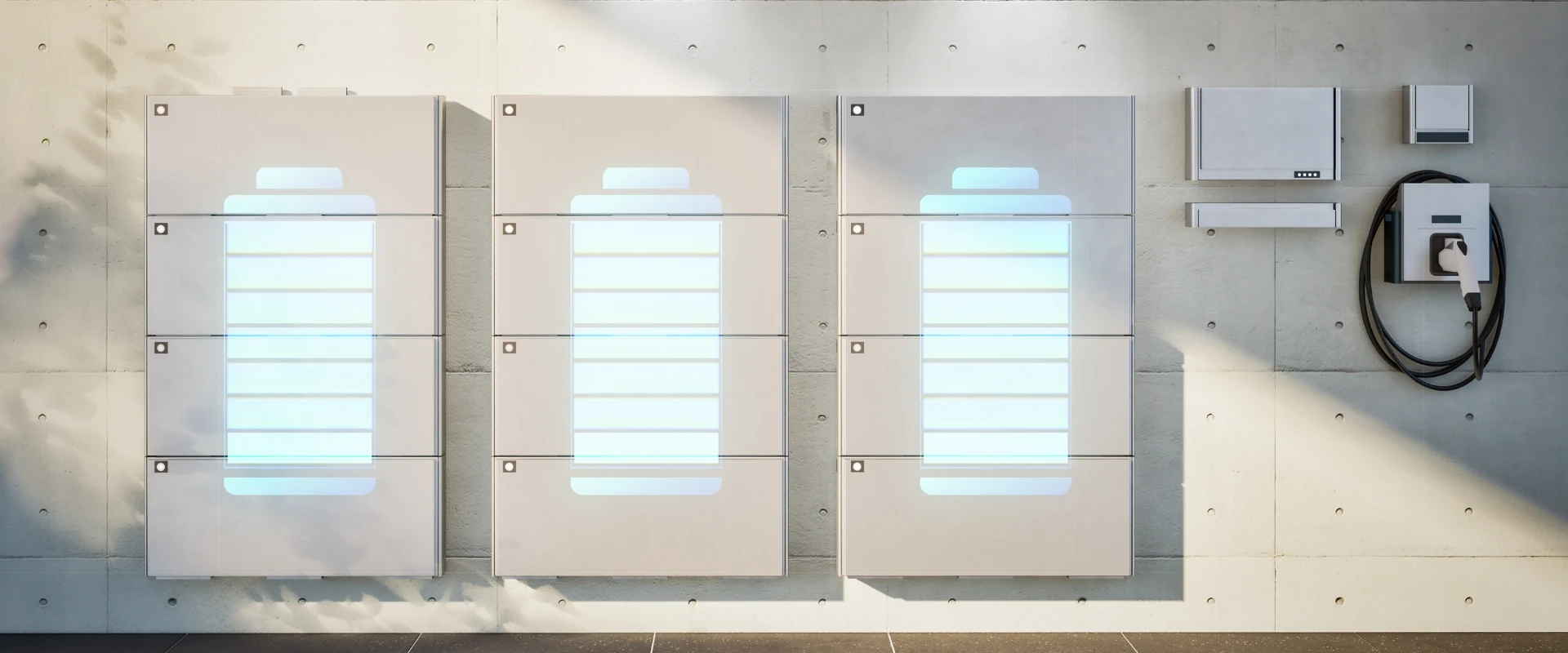
Solar Battery Storage in New York
Solar alone goes down with the grid. A battery is what keeps your lights on, and it changes how much of your own production you actually use.
What a battery actually does
Most people are surprised to learn that a normal grid tied solar system shuts off during a power cut. It has to, for the safety of line workers restoring the grid. So if your reason for wanting solar is keeping the lights on in a storm, panels alone will not do it and a battery is the part that does.
The second thing a battery does is less dramatic but adds up. Your panels produce most at midday, when most households use least. Without storage that surplus goes to the grid for a credit. With storage it goes into the battery and comes back out in the evening, which means you are using more of your own generation rather than exporting it.
Whether that second benefit is worth paying for in New York depends on your billing arrangement. Under Phase One Net Metering, exports are credited at the full retail rate, which weakens the financial case for storage and leaves backup as the main reason to buy one. That is a genuine trade off worth discussing with an installer rather than glossing over.
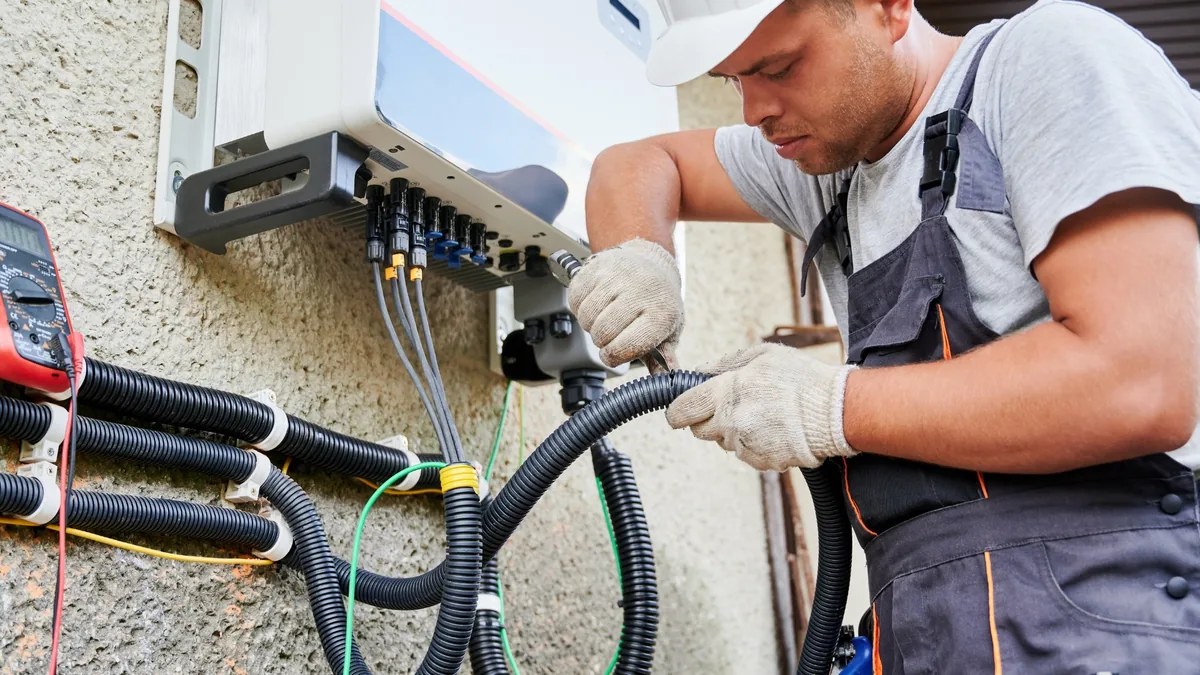
What a battery installation includes
- Load assessment. Working out what you actually want to keep running during an outage. Whole home backup costs considerably more than backing up a handful of critical circuits.
- Battery and inverter. The storage unit itself plus the hybrid or battery inverter that manages charging and discharging. Sometimes one box, sometimes two.
- Critical loads panel. A subpanel carrying the circuits you want backed up, typically the fridge, furnace, well pump, some lighting and internet. This is often where the practical decisions get made.
- Automatic transfer switching. The hardware that disconnects you from the grid and switches to battery within a fraction of a second when the power fails.
- Permits, inspection and commissioning. Batteries carry their own permitting and fire code requirements in New York, and some jurisdictions have specific rules about siting them inside a dwelling.
What to think about before adding storage
How often does your power actually go out?
The honest answer for some parts of New York is rarely. For rural areas on long distribution lines it is several times a winter. Your own history is the best guide.
Whole home or critical circuits?
Backing up everything including air conditioning and electric ranges requires substantially more capacity. Most households find critical circuits is the sensible middle ground.
Retrofit or install alongside solar?
Adding a battery at the same time as the panels is generally cheaper than coming back later, because much of the electrical work overlaps.
Well or sump pump
If you are on a well, or you rely on a sump pump, an outage becomes a water problem rather than just a lighting one. That usually moves storage up the priority list.
Space and siting
Batteries need a location that meets code, is temperature reasonable, and is accessible for service. Garages and utility rooms are the usual answers.
Three steps, and you can stop at any of them
Tell us about your property
Your address, roughly what you pay for electricity, and your roof type. It takes about a minute, and every question beyond the basics is optional.
We refer you to one installer
One company that works in your county and knows your utility's interconnection process. Not a lead pool, and not six companies calling you.
Free consultation and a written proposal
They assess your roof, your usage and your utility, then put numbers on paper. No obligation at any point, and no payment is ever taken through this site.
How to check any solar contractor
This is a new site with no customer reviews, so we are not going to show you any. What we can do is tell you exactly what to verify about whoever contacts you, and where to look it up. That applies to the installer we refer you to and to every other quote you get.
NABCEP certification
The North American Board of Certified Energy Practitioners is the industry standard credential for solar installers. It certifies the individual professional who holds it, not the company, so a firm advertising it may have one certified person and twenty who are not.
How to check. Ask which named individual holds it, then search that name in the directory.
Search the NABCEP directoryNYSERDA participation
Registration in the state's NY-Sun programme. This one is not a nice to have: the New York State incentive is only available through an approved contractor, so using an unregistered installer forfeits it. Some also hold the Quality Solar Installer designation, which requires at least 12 NY-Sun projects in the past year and an average of 4 out of 5 on NYSERDA's own field inspections.
How to check. Search the company name in NYSERDA's list before you sign anything.
Check NYSERDA's contractor listLicensing and insurance
Appropriate electrical licensing for the work, plus general liability and workers compensation cover. A contractor without workers compensation can leave you personally exposed if someone is injured on your roof.
How to check. Ask for certificates of insurance naming you, and check the licence with your town or county before work starts. Do not accept a policy number alone.
Local experience
Interconnection is where most New York solar timelines slip, and it is handled very differently by Con Edison, National Grid, NYSEG, RG&E and PSEG Long Island. Permitting varies again by town.
How to check. Ask how many systems they have energised on your specific utility in the past year, and for two addresses in your county you can drive past.
NY Solar Finder is operated by RBR Growth Consulting. We are not a solar installer, we hold no industry certification, and we do not guarantee the credentials of the company that contacts you. We name these standards, and link to the bodies that issue them, so that you can check that company yourself before you sign anything.
Questions we get asked about this
No. A standard grid tied system disconnects automatically when the grid goes down, as a safety requirement to protect line workers. Adding storage with the right switching hardware is what lets you keep running.
It depends entirely on capacity and what you are running. Backing up a fridge, furnace, internet and some lights, a typical home battery might carry you through a night or more. Running central air conditioning off the same battery could empty it in hours.
Usually yes. Whether it is straightforward depends on your existing inverter. Some systems accept a battery easily, others need additional equipment, which affects cost.
Very little. Modern lithium systems are sealed and managed by their own software. The practical considerations are keeping the area clear and accessible, and watching the monitoring app for faults.
Manufacturers typically warrant them for around ten years, often with a stated capacity retention at the end of that period. That is shorter than the panels, so a battery is usually expected to be replaced at least once over the life of the array.
Related reading
Find out what this would look like on your property
One local installer, one free consultation, one written proposal. Your details are never sold.