
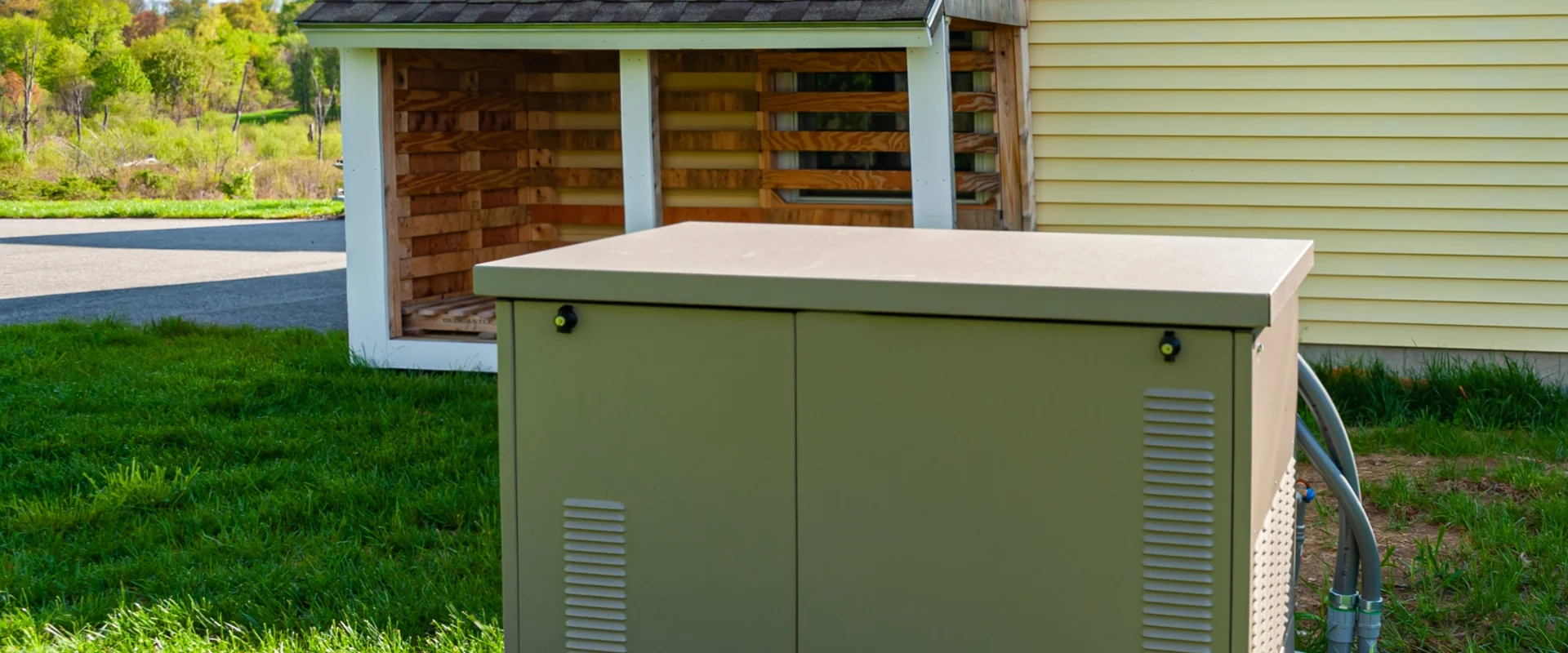
Solar and Battery vs a Standby Generator
These solve overlapping but genuinely different problems, and the right answer depends on how long your power tends to be out.
A standby generator runs indefinitely while it has fuel, making it better for multi-day outages. Solar with battery storage runs silently, needs no fuel, recharges daily from the sun, and also saves money every day of the year. Generators only earn their cost during an outage.
The core difference
A generator is insurance. It sits idle, costs money to maintain, and does nothing at all until the power fails. When it does fail, it runs as long as it has fuel.
Solar with storage is an investment that also provides backup. It reduces your bill every single day, and during an outage the battery carries you while the panels recharge it each day.
That distinction, an always-earning asset versus a rarely-used insurance policy, is the heart of the comparison.
Head to head
| Solar and battery | Standby generator | |
|---|---|---|
| Runtime | Battery capacity, recharged daily by the panels | Indefinite while fuel lasts |
| Fuel | None | Natural gas, propane or diesel |
| Noise | Silent | Loud, and some municipalities restrict it |
| Maintenance | Very little | Regular servicing, oil changes, exercise cycles |
| Value when the power is on | Reduces your bill daily | None |
| Emissions | None in operation | Combustion, and carbon monoxide risk if sited poorly |
| Best for | Frequent short outages, daily savings, quiet operation | Long multi-day outages, whole-home heavy loads |
How long is your power actually out?
This is the question that decides it, and most people answer from memory rather than record.
If your outages are a few hours several times a year, which describes much of suburban and urban New York, a battery covers them comfortably and pays for itself the rest of the time.
If you are on a long rural distribution line in the Southern Tier or the Adirondacks and lose power for days after a storm, a generator's indefinite runtime is genuinely hard to match with storage alone.
You can have both
It is not always either/or. Some households run solar and storage for daily savings and short outages, and keep a generator for the rare multi-day event. That costs more than either alone, but for a property that genuinely cannot be without power it is a legitimate answer.
Questions people ask about this
For frequent short outages, usually yes, because it also saves money every day the power is on. For multi-day outages, a generator's indefinite runtime is hard to beat. Your own outage history is the best guide.
It depends on capacity and what you run. Backing up a fridge, furnace, internet and lighting, a typical home battery might carry you overnight or longer. Running central air conditioning off the same battery could empty it in hours.
Solar alone does not provide backup, because grid-tied systems shut down during an outage for line worker safety. You need either battery storage or a generator. Which one depends on how long your outages typically last.
They need regular servicing, oil changes and periodic exercise runs. That is an ongoing cost and effort that storage does not carry, and it is easy to overlook when comparing purchase prices.
If it is paired with solar, yes. The panels recharge it each day, which is the main advantage storage has over a battery-only backup. Output depends on the weather, so a run of dark winter days reduces what you get back.
How to check any solar contractor
This is a new site with no customer reviews, so we are not going to show you any. What we can do is tell you exactly what to verify about whoever contacts you, and where to look it up. That applies to the installer we refer you to and to every other quote you get.
NABCEP certification
The North American Board of Certified Energy Practitioners is the industry standard credential for solar installers. It certifies the individual professional who holds it, not the company, so a firm advertising it may have one certified person and twenty who are not.
How to check. Ask which named individual holds it, then search that name in the directory.
Search the NABCEP directoryNYSERDA participation
Registration in the state's NY-Sun programme. This one is not a nice to have: the New York State incentive is only available through an approved contractor, so using an unregistered installer forfeits it. Some also hold the Quality Solar Installer designation, which requires at least 12 NY-Sun projects in the past year and an average of 4 out of 5 on NYSERDA's own field inspections.
How to check. Search the company name in NYSERDA's list before you sign anything.
Check NYSERDA's contractor listLicensing and insurance
Appropriate electrical licensing for the work, plus general liability and workers compensation cover. A contractor without workers compensation can leave you personally exposed if someone is injured on your roof.
How to check. Ask for certificates of insurance naming you, and check the licence with your town or county before work starts. Do not accept a policy number alone.
Local experience
Interconnection is where most New York solar timelines slip, and it is handled very differently by Con Edison, National Grid, NYSEG, RG&E and PSEG Long Island. Permitting varies again by town.
How to check. Ask how many systems they have energised on your specific utility in the past year, and for two addresses in your county you can drive past.
NY Solar Finder is operated by RBR Growth Consulting. We are not a solar installer, we hold no industry certification, and we do not guarantee the credentials of the company that contacts you. We name these standards, and link to the bodies that issue them, so that you can check that company yourself before you sign anything.
Related reading
See what solar would look like on your roof
One local installer, one free consultation, one written proposal. Your details are never sold.