Solar Panel Types Compared
Three technologies, and for a New York home the choice is more settled than the amount written about it suggests.
Monocrystalline panels are the standard choice for residential solar today: highest efficiency, all-black appearance, best performance per square metre. Polycrystalline is older, cheaper and slightly less efficient. Thin film is flexible and lightweight but needs far more area, so it is rare on homes.
The three types
| Monocrystalline | Polycrystalline | Thin film | |
|---|---|---|---|
| Made from | A single silicon crystal | Multiple silicon fragments melted together | Photovoltaic material on a flexible backing |
| Efficiency | Highest | Slightly lower | Lowest per square metre |
| Appearance | Uniform black | Speckled blue | Uniform, often matte |
| Cost per watt | Higher | Lower | Varies |
| Space needed | Least | More | Most |
| Typical use | Almost all residential | Budget and older installations | Commercial flat roofs, specialist applications |
Why monocrystalline won
The price gap that once made polycrystalline attractive has narrowed to the point where it rarely decides anything. Monocrystalline produces more from the same roof area, which matters on a typical New York home where usable roof space is the binding constraint rather than budget.
The all-black appearance is also, honestly, a real factor in why people choose it. On a visible front-facing roof that is a legitimate consideration rather than a frivolous one.
Where the others still make sense
Polycrystalline still appears where cost per watt is the dominant concern and roof area is plentiful, such as some ground mount arrays on large rural parcels in the Southern Tier or Western New York.
Thin film is lightweight and flexible, which suits roofs that cannot carry conventional load or curved surfaces. On commercial membrane roofs with vast area and structural limits it has a genuine niche. It is uncommon on houses because it needs considerably more space for the same output.
Questions people ask about this
Monocrystalline for almost all residential installations. It is more efficient per square metre and the price gap has narrowed substantially. Polycrystalline remains reasonable where roof or land area is plentiful and cost per watt dominates.
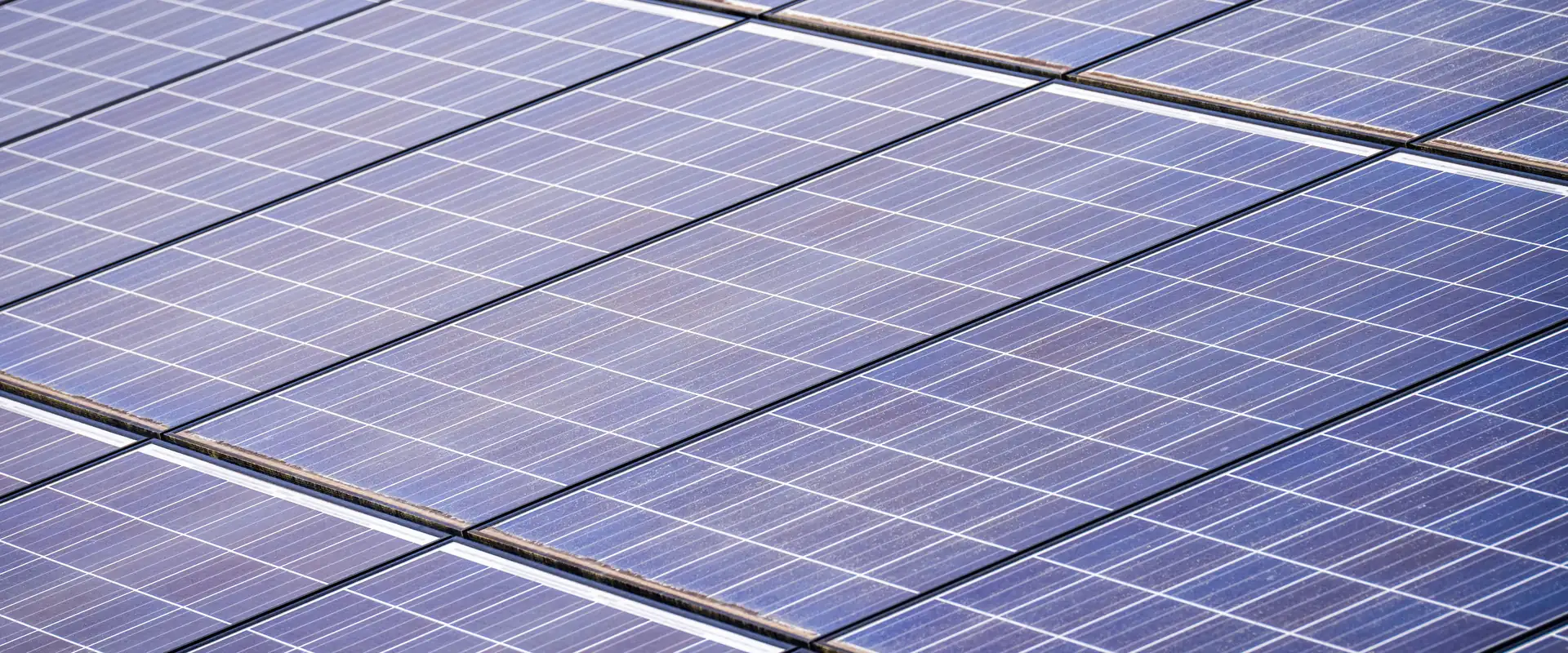
Monocrystalline panels are uniformly black. Polycrystalline have a speckled blue appearance from the multiple crystal fragments. It is visible from the ground once you know what to look for.
Rarely. They need considerably more area for the same output, which makes them impractical on typical residential roofs. Their niche is commercial membrane roofs with structural load limits and plenty of space.
Less than people assume. Shade tolerance is determined mainly by the inverter architecture rather than the cell technology. Microinverters or optimisers are what let a partly shaded array keep performing.
They do run slightly warmer, and output falls marginally as temperature rises. In New York's climate the effect is small and is outweighed by the higher baseline efficiency.
How to check any solar contractor
This is a new site with no customer reviews, so we are not going to show you any. What we can do is tell you exactly what to verify about whoever contacts you, and where to look it up. That applies to the installer we refer you to and to every other quote you get.
NABCEP certification
The North American Board of Certified Energy Practitioners is the industry standard credential for solar installers. It certifies the individual professional who holds it, not the company, so a firm advertising it may have one certified person and twenty who are not.
How to check. Ask which named individual holds it, then search that name in the directory.
Search the NABCEP directoryNYSERDA participation
Registration in the state's NY-Sun programme. This one is not a nice to have: the New York State incentive is only available through an approved contractor, so using an unregistered installer forfeits it. Some also hold the Quality Solar Installer designation, which requires at least 12 NY-Sun projects in the past year and an average of 4 out of 5 on NYSERDA's own field inspections.
How to check. Search the company name in NYSERDA's list before you sign anything.
Check NYSERDA's contractor listLicensing and insurance
Appropriate electrical licensing for the work, plus general liability and workers compensation cover. A contractor without workers compensation can leave you personally exposed if someone is injured on your roof.
How to check. Ask for certificates of insurance naming you, and check the licence with your town or county before work starts. Do not accept a policy number alone.
Local experience
Interconnection is where most New York solar timelines slip, and it is handled very differently by Con Edison, National Grid, NYSEG, RG&E and PSEG Long Island. Permitting varies again by town.
How to check. Ask how many systems they have energised on your specific utility in the past year, and for two addresses in your county you can drive past.
NY Solar Finder is operated by RBR Growth Consulting. We are not a solar installer, we hold no industry certification, and we do not guarantee the credentials of the company that contacts you. We name these standards, and link to the bodies that issue them, so that you can check that company yourself before you sign anything.
Related reading
See what solar would look like on your roof
One local installer, one free consultation, one written proposal. Your details are never sold.