
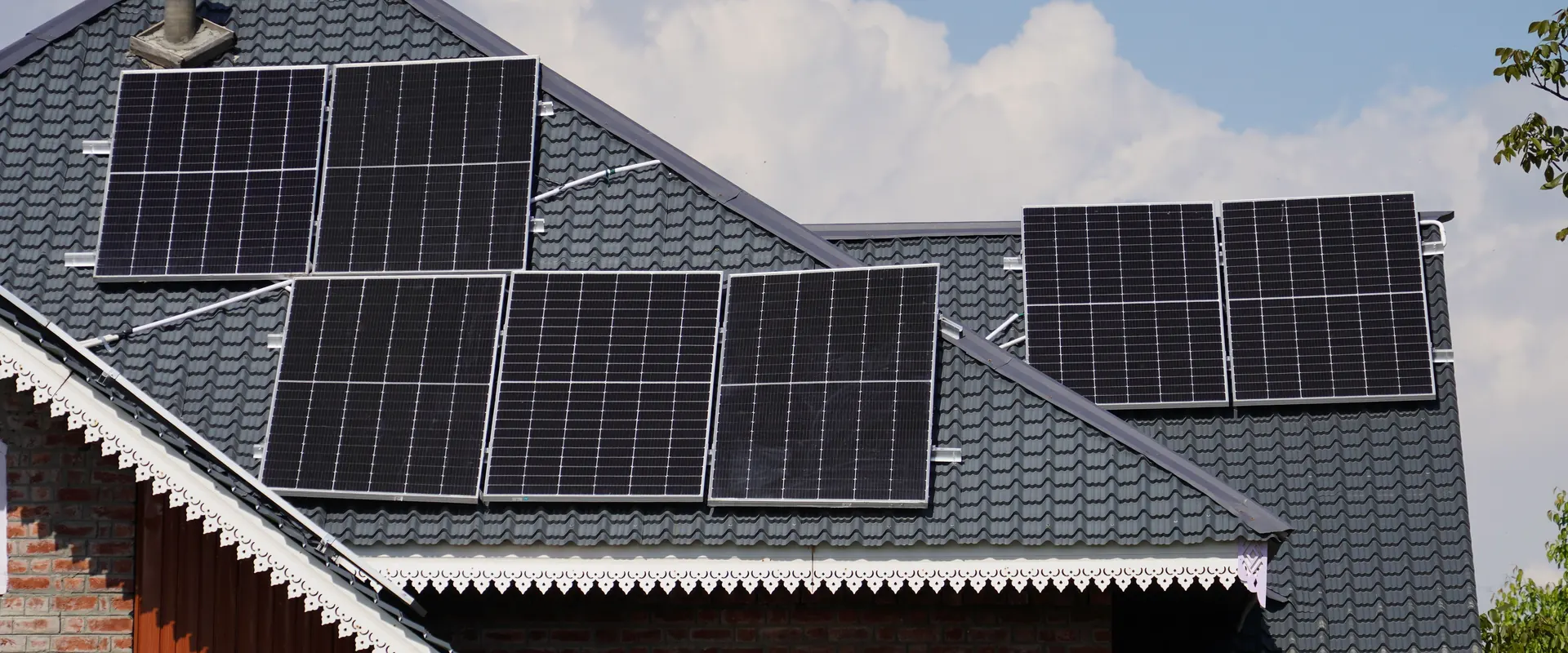
How Long Do Solar Panels Last?
Panels routinely outlast their warranties. The component that will not is the one nobody asks about.
Solar panels typically carry 25 to 30 year performance warranties and often keep producing well beyond that at reduced output. Inverters have a shorter service life and are commonly replaced once during a system's life. Home batteries are usually warranted around 10 years.
Panels: decades, then slow decline
A modern panel carries a performance warranty of 25 to 30 years, typically guaranteeing something in the region of 80 to 90 percent of original output at the end of the term. That is a warranty about degradation, not about failure.
Panels do not usually stop working. They gradually produce slightly less, commonly around half a percent a year. A twenty five year old panel is still a working panel, just a less productive one, and plenty of arrays from the 1990s are still generating.
Inverters: the one to budget for
Batteries: roughly a decade
Home batteries are usually warranted around ten years, often with a stated retained capacity at the end of the term. That is materially shorter than the panels, so a battery is normally expected to be replaced at least once across the life of the array. Worth factoring into a comparison against a generator.
What actually shortens life in New York
Salt air
Coastal Long Island and Sound-facing Westchester accelerate corrosion on racking and fixings. Corrosion-rated hardware matters.
Poor installation
By far the largest factor. Bad flashing causes leaks, loose mounting causes movement, poor connections cause failures.
Hail and storm damage
Panels are tested against hail and generally survive it, but severe events happen. Check your homeowner policy covers the array.
Heat
Less of an issue in New York than in southern states. Panels here run cooler and degrade slightly slower for it.
Undetected faults
A failed optimiser or a dead string can go unnoticed for months without monitoring. Not a lifespan issue exactly, but it wastes years of production.
What happens at end of life
Panels do not become waste at year 25. Most keep producing. The decision to replace is usually economic, when newer panels would generate enough more from the same roof area to justify the swap.
Panel recycling infrastructure is developing, and manufacturers increasingly operate take-back schemes. Worth asking about, though it is a question for decades away rather than now.
Questions people ask about this
Performance warranties typically run 25 to 30 years, guaranteeing roughly 80 to 90 percent of original output at the end. Panels usually continue producing beyond that at gradually reducing output rather than failing outright.
The inverter, in most cases. It is electronics under continuous load with a shorter service life than the panels, and one replacement across the system's life is a reasonable expectation to budget for.
Yes, slowly and predictably, commonly around half a percent a year. It is gradual and already accounted for in a properly built production estimate. A sudden drop means something has failed rather than degraded.
Typically warranted around ten years, often with a specified retained capacity at the end of the term. That is shorter than the panels, so plan for at least one replacement across the array's life.
Common in this industry and not the disaster it sounds. Manufacturer equipment warranties normally remain valid regardless of who installed the system, and independent service companies handle orphaned arrays. The workmanship warranty is the part that disappears with the company.
How to check any solar contractor
This is a new site with no customer reviews, so we are not going to show you any. What we can do is tell you exactly what to verify about whoever contacts you, and where to look it up. That applies to the installer we refer you to and to every other quote you get.
NABCEP certification
The North American Board of Certified Energy Practitioners is the industry standard credential for solar installers. It certifies the individual professional who holds it, not the company, so a firm advertising it may have one certified person and twenty who are not.
How to check. Ask which named individual holds it, then search that name in the directory.
Search the NABCEP directoryNYSERDA participation
Registration in the state's NY-Sun programme. This one is not a nice to have: the New York State incentive is only available through an approved contractor, so using an unregistered installer forfeits it. Some also hold the Quality Solar Installer designation, which requires at least 12 NY-Sun projects in the past year and an average of 4 out of 5 on NYSERDA's own field inspections.
How to check. Search the company name in NYSERDA's list before you sign anything.
Check NYSERDA's contractor listLicensing and insurance
Appropriate electrical licensing for the work, plus general liability and workers compensation cover. A contractor without workers compensation can leave you personally exposed if someone is injured on your roof.
How to check. Ask for certificates of insurance naming you, and check the licence with your town or county before work starts. Do not accept a policy number alone.
Local experience
Interconnection is where most New York solar timelines slip, and it is handled very differently by Con Edison, National Grid, NYSEG, RG&E and PSEG Long Island. Permitting varies again by town.
How to check. Ask how many systems they have energised on your specific utility in the past year, and for two addresses in your county you can drive past.
NY Solar Finder is operated by RBR Growth Consulting. We are not a solar installer, we hold no industry certification, and we do not guarantee the credentials of the company that contacts you. We name these standards, and link to the bodies that issue them, so that you can check that company yourself before you sign anything.
Related reading
See what solar would look like on your roof
One local installer, one free consultation, one written proposal. Your details are never sold.