Residential Solar Installation
How rooftop solar works on a New York home: system sizing, what a quote includes, state incentives, and how.
Learn more
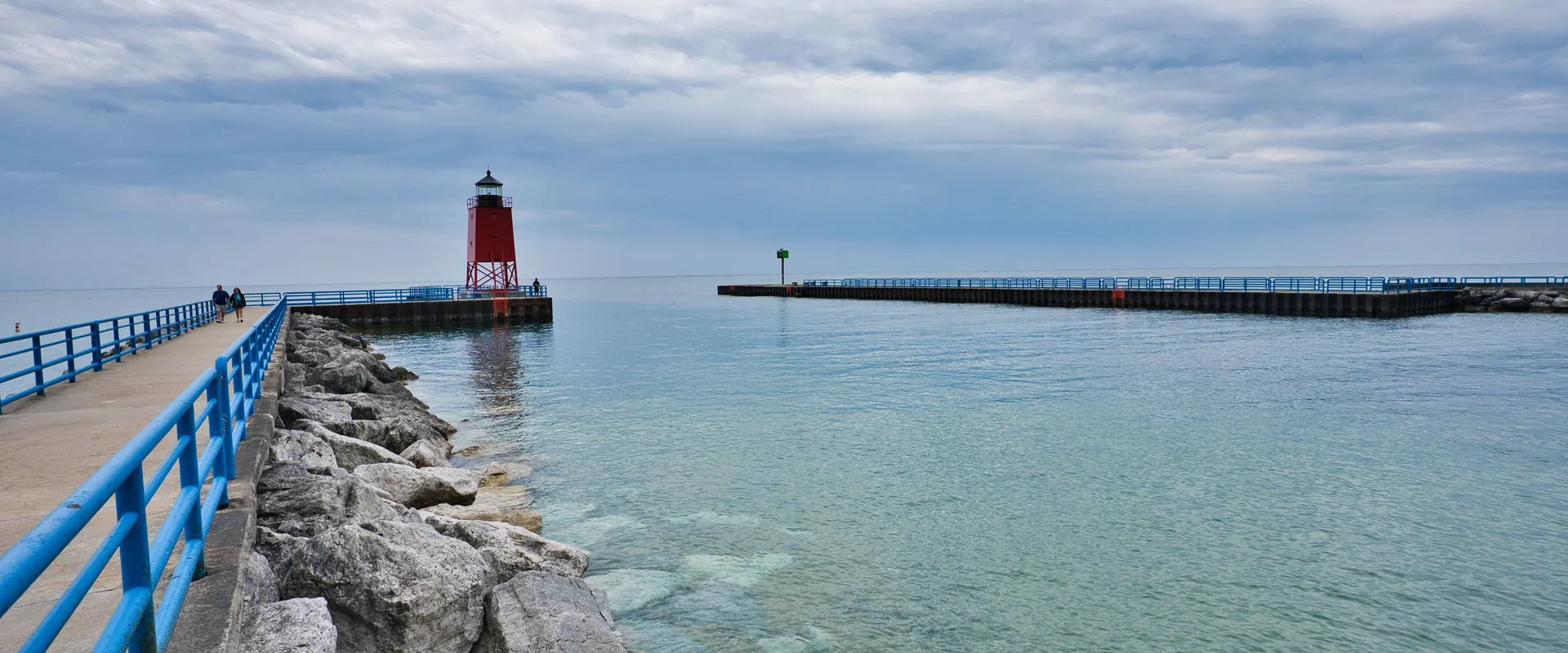
Lake effect snow and two different utilities across Buffalo and Rochester.
Buffalo and Rochester are the two largest markets in Western New York and they are not on the same utility. Buffalo is National Grid, Rochester is RG&E. Different rates, different interconnection process, different timelines. A payback figure a friend quotes you from the other city does not transfer.
Lake effect snow defines the winter here, with Buffalo averaging in the region of 95 inches and the southern suburbs toward Hamburg and Orchard Park often getting considerably more than the city proper. As in Central New York, this affects design rather than viability. Racking is engineered for the load, tilt helps shedding, and annual production estimates already model the losses.
Housing is the region's real advantage. Western New York has some of the most affordable detached housing in the state, much of it on lots with genuine space. Buffalo's characteristic doubles and the postwar suburbs of Amherst, Cheektowaga and Tonawanda offer straightforward roofs. Rochester's eastern suburbs are similar.
The older city stock in both Buffalo and Rochester frequently needs an electrical service upgrade before solar. Worth establishing early, because it is a real cost that some quotes omit and it changes the comparison between bids.
National Grid and RG&E differ on rates and interconnection. Confirm which serves your address before comparing any payback estimate.
Orchard Park, Hamburg and the ski country south of the city sit in a heavier lake effect band. Snow load specification should reflect the site, not the regional average.
Older Buffalo and Rochester housing is frequently still on 100 amp service. Ask whether an upgrade is included in the quote or excluded from it.
We cover Erie, Monroe, Niagara, Ontario and Wyoming counties. Smaller communities are served by the same installers who work the larger markets nearby.
National Grid territory. Characteristic double housing and affordable detached stock, with service upgrades common.
Solar in BuffaloRG&E territory, so different rates and process from Buffalo. Varied stock from historic to postwar.
Solar in RochesterAffordable housing with plenty of roof area. Older electrical services are the usual constraint.
Buffalo's largest suburb. Postwar and modern subdivisions with simple, well oriented roofs.
Established and newer suburban housing on larger lots, with ground mount viable in Clarence.
South of Buffalo and squarely in the heavier lake effect belt. Snow load design matters most here.
Affluent Rochester suburbs on RG&E, generally good roof stock with mature tree cover.
Inner Rochester suburb, established housing, shading from mature canopy is the common constraint.
Newer development east of Rochester with modern electrical services and simple roof geometry.
Rural parcels with substantial ground mount potential.
How rooftop solar works on a New York home: system sizing, what a quote includes, state incentives, and how.
Learn moreRooftop and canopy solar for New York businesses. How systems are sized, how demand charges change the maths,.
Learn moreHow home battery storage works with solar in New York: backup power during outages, sizing, what it costs to.
Learn moreWhat to know before installing a Powerwall or comparable home battery in New York: sizing, whole home versus.
Learn moreLevel 2 home EV charger installation in New York. What it involves, whether your panel can take it, and why.
Learn moreWhat solar panel maintenance actually requires in New York: cleaning, inspection, monitoring, snow, and what.
Learn moreSolar options for New York nonprofits, churches, schools and municipalities, plus community solar for renters.
Learn moreThis is a new site with no customer reviews, so we are not going to show you any. What we can do is tell you exactly what to verify about whoever contacts you, and where to look it up. That applies to the installer we refer you to and to every other quote you get.
The North American Board of Certified Energy Practitioners is the industry standard credential for solar installers. It certifies the individual professional who holds it, not the company, so a firm advertising it may have one certified person and twenty who are not.
How to check. Ask which named individual holds it, then search that name in the directory.
Search the NABCEP directoryRegistration in the state's NY-Sun programme. This one is not a nice to have: the New York State incentive is only available through an approved contractor, so using an unregistered installer forfeits it. Some also hold the Quality Solar Installer designation, which requires at least 12 NY-Sun projects in the past year and an average of 4 out of 5 on NYSERDA's own field inspections.
How to check. Search the company name in NYSERDA's list before you sign anything.
Check NYSERDA's contractor listAppropriate electrical licensing for the work, plus general liability and workers compensation cover. A contractor without workers compensation can leave you personally exposed if someone is injured on your roof.
How to check. Ask for certificates of insurance naming you, and check the licence with your town or county before work starts. Do not accept a policy number alone.
Interconnection is where most New York solar timelines slip, and it is handled very differently by Con Edison, National Grid, NYSEG, RG&E and PSEG Long Island. Permitting varies again by town.
How to check. Ask how many systems they have energised on your specific utility in the past year, and for two addresses in your county you can drive past.
NY Solar Finder is operated by RBR Growth Consulting. We are not a solar installer, we hold no industry certification, and we do not guarantee the credentials of the company that contacts you. We name these standards, and link to the bodies that issue them, so that you can check that company yourself before you sign anything.
National Grid, RG&E and NYSEG all operate in Western New York. Which one you are on affects your electricity rate, your interconnection process and how long approval takes, so it changes payback. Confirm your utility before comparing a quote against a figure a neighbour quotes you.
Western New York sees Buffalo averages roughly 95 inches, much of it lake effect. It does not stop solar working. Panels produce less in winter because days are short rather than because it is cold, and they are slightly more efficient at low temperatures. Snow slides off tilted glass as it warms, usually within a day or two. Any credible annual production estimate already models winter losses for this climate. What snowfall does change is design: tilt and racking must be specified for local load.
Lake effect snow and two different utilities across Buffalo and Rochester. Buffalo and Rochester are the two largest markets in Western New York and they are not on the same utility.
All of them. We cover Erie, Monroe, Niagara, Ontario and Wyoming counties, including Buffalo, Rochester, Niagara Falls, Amherst, Williamsville and Clarence, Orchard Park and Hamburg and the surrounding towns and villages. Smaller communities are covered by the same installers who serve the larger ones nearby.
No, one will. We refer you to a single installer who already works in your part of Western New York and knows the local permitting offices and the interconnection process for whichever of National Grid, RG&E and NYSEG serves you. We do not sell your details into a lead pool, which is the practice that causes six companies to ring you over the following week.
One local installer, one free consultation, one written proposal. Your details are never sold.
Tell us about your property and we will refer you to one local New York installer. Free, and no obligation.