Do Solar Panels Work in a New York Winter?
This is the first question almost every New Yorker asks, and it deserves a straight answer rather than reassurance.
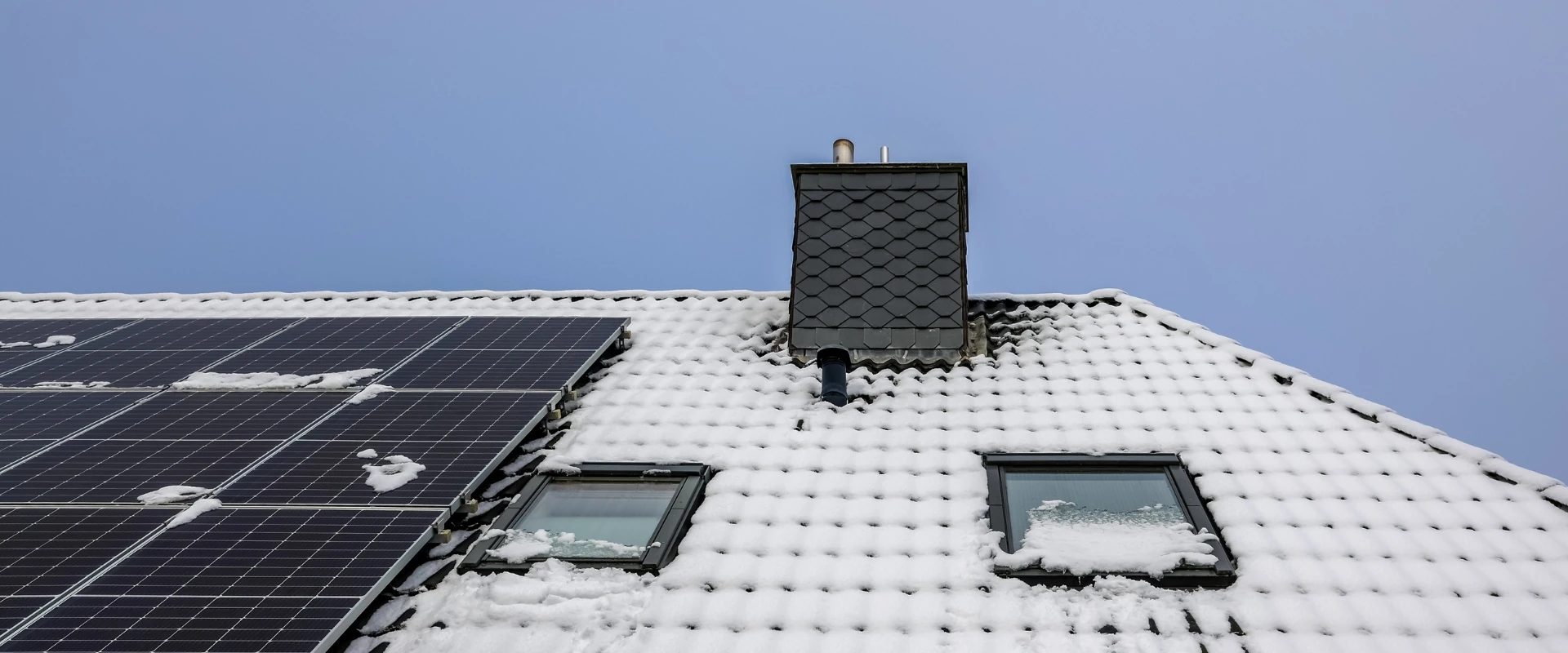
Yes. Solar panels produce less in winter because daylight hours are shorter, not because it is cold. Panels are actually slightly more efficient at low temperatures. On a reasonable pitch, snow typically slides off within a day or two, though a shallow array in a hard freeze can hold it much longer, and annual production estimates already account for winter losses.
Cold helps. Genuinely.
Solar panels are semiconductors, and semiconductors conduct better when cool. A panel operating on a cold bright day produces more per unit of sunlight than the same panel baking on a July afternoon.
What reduces winter output is daylight. In late December New York gets roughly nine hours between sunrise and sunset, against about fifteen in June, and the sun sits lower so the light passes through more atmosphere. Shorter days, weaker light, less production. Temperature is not the culprit.
What snow actually does
Snow on a panel stops production while it sits there. That is true and worth saying plainly.
What tends to happen is that panel glass is dark and smooth, and it warms in daylight even in cold weather. Snow at the interface melts and the sheet slides off, usually within a day or two of a storm. Tilt helps considerably, which is why steeper arrays clear faster than ones mounted flush to a low slope roof.
Panels also warm slightly from underneath once any part is exposed and generating, which accelerates the process.
Regional reality in New York
| Region | Approximate seasonal snowfall | What it means |
|---|---|---|
| Syracuse and Central NY | Around 120 inches | Among the snowiest large cities in the country. Snow load engineering is essential, and tilt matters. |
| Buffalo and Western NY | Around 95 inches, more in the southern suburbs | Lake effect. Southern suburbs like Orchard Park often exceed the city figure. |
| Binghamton and Southern Tier | Around 80 inches | Substantial. Snow load specification is a structural requirement. |
| Capital Region | Around 60 inches | Real but moderate for upstate. |
| Hudson Valley | Roughly 35 to 45 inches | Tree shading is a bigger constraint here than snow. |
| Long Island and NYC | Roughly 25 to 30 inches | The lightest in the state. Winter loss is smallest here. |
Why the annual number is what counts
Solar is measured across a year, not a month. Your system will overproduce heavily in summer and underproduce in winter, and net metering's twelve month true-up is precisely what reconciles the two.
So the correct question is not "how much will I lose in January" but "what does the system produce across the year". Any credible estimate for a New York address already models the winter months using local climate data.
Questions people ask about this
Not while the snow covers them. On a reasonable pitch it usually slides off within a day or two as the dark glass warms in daylight. Steeper arrays clear faster than ones mounted flush to a low slope roof.
No. It is the most common cause of injury after going solar and snow rakes can damage the glass. Snow clears itself and annual production estimates already assume some winter loss.
No, cold slightly improves it. Panels are semiconductors and conduct better when cool. Winter output falls because days are shorter and the sun sits lower, not because of temperature.
It varies by region and roof, which is why a proper estimate models your specific address. The relevant figure is annual production, because net metering reconciles summer surplus against winter shortfall across a twelve month cycle.
Yes, and both have substantial installed solar. Snow affects design rather than viability: racking must be engineered for local load and tilt helps shedding. Electricity rates, not snowfall, decide the economics.
How to check any solar contractor
This is a new site with no customer reviews, so we are not going to show you any. What we can do is tell you exactly what to verify about whoever contacts you, and where to look it up. That applies to the installer we refer you to and to every other quote you get.
NABCEP certification
The North American Board of Certified Energy Practitioners is the industry standard credential for solar installers. It certifies the individual professional who holds it, not the company, so a firm advertising it may have one certified person and twenty who are not.
How to check. Ask which named individual holds it, then search that name in the directory.
Search the NABCEP directoryNYSERDA participation
Registration in the state's NY-Sun programme. This one is not a nice to have: the New York State incentive is only available through an approved contractor, so using an unregistered installer forfeits it. Some also hold the Quality Solar Installer designation, which requires at least 12 NY-Sun projects in the past year and an average of 4 out of 5 on NYSERDA's own field inspections.
How to check. Search the company name in NYSERDA's list before you sign anything.
Check NYSERDA's contractor listLicensing and insurance
Appropriate electrical licensing for the work, plus general liability and workers compensation cover. A contractor without workers compensation can leave you personally exposed if someone is injured on your roof.
How to check. Ask for certificates of insurance naming you, and check the licence with your town or county before work starts. Do not accept a policy number alone.
Local experience
Interconnection is where most New York solar timelines slip, and it is handled very differently by Con Edison, National Grid, NYSEG, RG&E and PSEG Long Island. Permitting varies again by town.
How to check. Ask how many systems they have energised on your specific utility in the past year, and for two addresses in your county you can drive past.
NY Solar Finder is operated by RBR Growth Consulting. We are not a solar installer, we hold no industry certification, and we do not guarantee the credentials of the company that contacts you. We name these standards, and link to the bodies that issue them, so that you can check that company yourself before you sign anything.
Related reading
See what solar would look like on your roof
One local installer, one free consultation, one written proposal. Your details are never sold.