
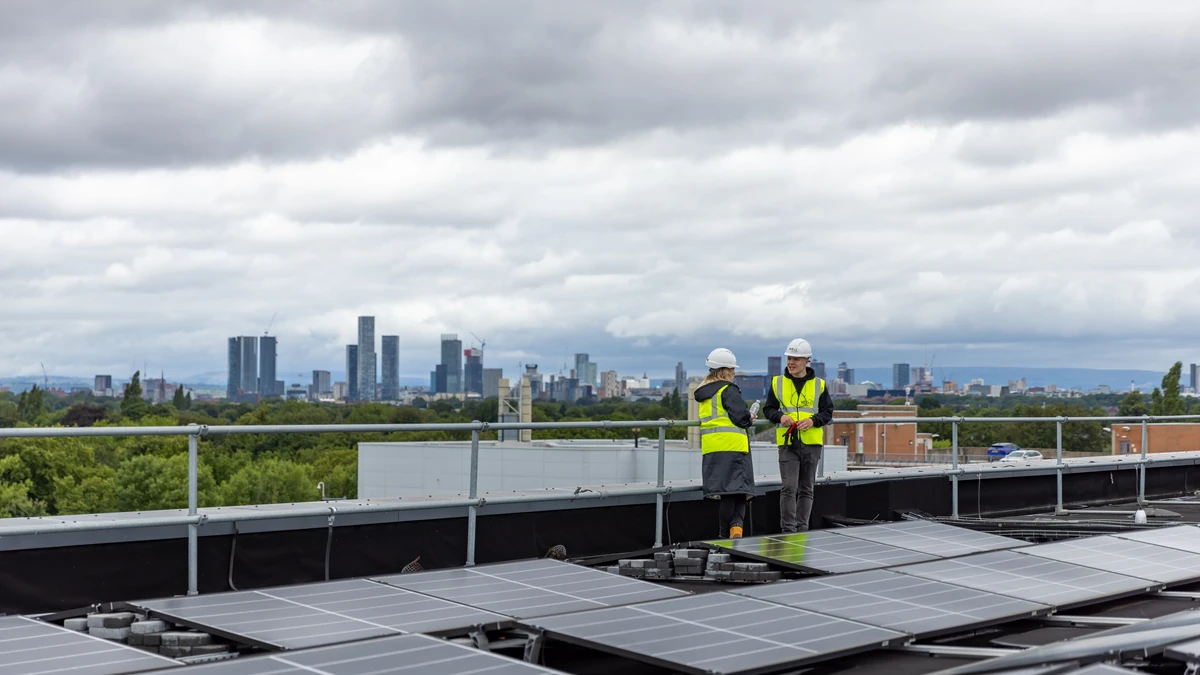
Commercial Solar Installation in New York
Commercial solar is a different calculation from residential. Demand charges, roof structure and tax treatment all change the answer.
Why the commercial case is different
A business does not just pay for the electricity it uses. Most commercial accounts also pay demand charges, based on the single highest fifteen minute peak in the billing period. That peak often lands in the middle of a summer afternoon, which is exactly when a solar array is producing hardest. Shaving it can be worth as much as the energy savings.
The tax treatment is also different, and this is the important one in 2026. The federal residential credit ended for installations after 31 December 2025, but the commercial investment credit under Section 48E was not repealed. Businesses still have a federal route that homeowners no longer do.
The deadlines on it are real. Projects that began construction on or after 4 July 2026 must be placed in service by 31 December 2027. That is worth knowing before you start a process that routinely takes six to twelve months on a commercial building.
What a commercial project involves
- Structural and electrical assessment. Roof load capacity, membrane condition and remaining life, plus whether your existing service and switchgear can take the interconnection.
- Usage and demand analysis. Interval data from your utility, not just monthly totals, so the design targets your actual demand peaks rather than an average.
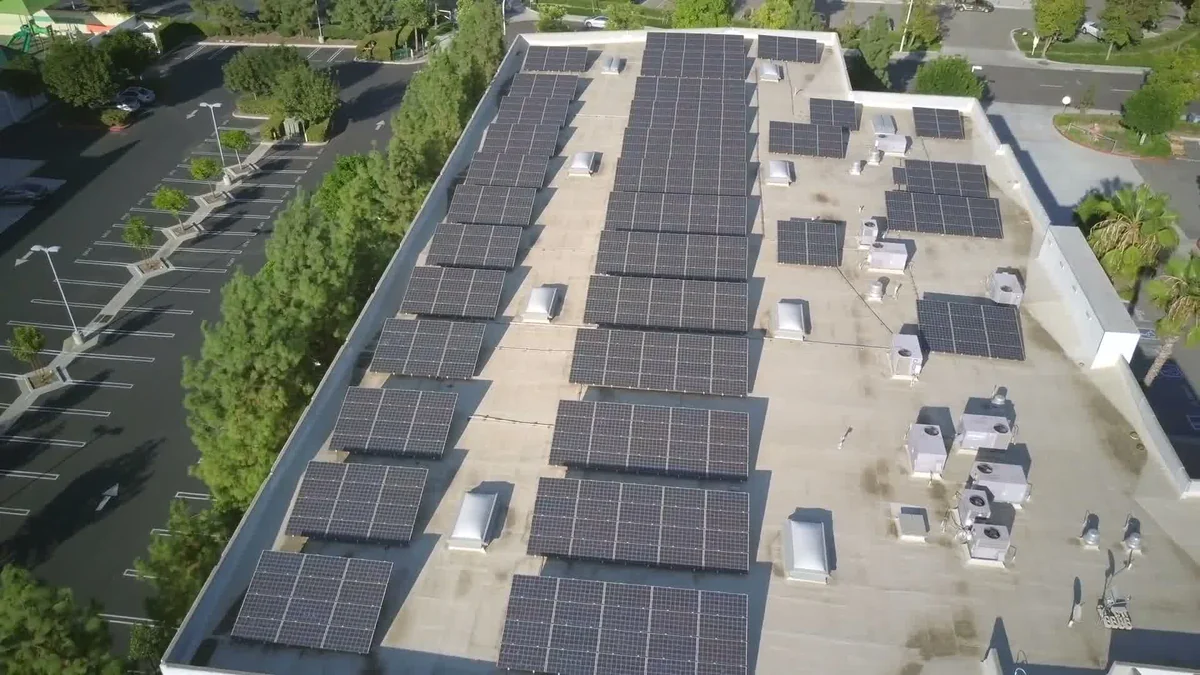
- System design and engineering. Ballasted flat roof arrays, pitched roof mounting, carport canopies or ground mount, depending on the site and how much of the load you want to cover.
- Permitting and interconnection. Commercial interconnection is a longer and more involved process than residential, and it can be the critical path on the whole schedule.
- Financing and incentive structuring. Direct purchase, loan, lease or power purchase agreement. The right structure depends on your tax position, and it is worth involving your accountant early.
What drives a commercial quote
Roof type and remaining life
Ballasted systems suit flat membrane roofs with capacity to spare. If the membrane is near the end of its life, replace it first.
Demand charge structure
How much of your bill is demand rather than energy changes the payback significantly, and it also affects whether battery storage is worth adding.
Available roof or land area
Most commercial sites cannot offset one hundred percent of usage from the roof alone. Carport canopies and ground mount are the usual answer where land allows.
Ownership of the building
If you lease, the project needs the landlord involved. This is solvable but it adds time, so raise it at the start.
Your tax position
The value of an investment credit depends on having tax liability to offset. This is the question your accountant needs to answer before you commit.
Three steps, and you can stop at any of them
Tell us about your property
Your address, roughly what you pay for electricity, and your roof type. It takes about a minute, and every question beyond the basics is optional.
We refer you to one installer
One company that works in your county and knows your utility's interconnection process. Not a lead pool, and not six companies calling you.
Free consultation and a written proposal
They assess your roof, your usage and your utility, then put numbers on paper. No obligation at any point, and no payment is ever taken through this site.
How to check any solar contractor
This is a new site with no customer reviews, so we are not going to show you any. What we can do is tell you exactly what to verify about whoever contacts you, and where to look it up. That applies to the installer we refer you to and to every other quote you get.
NABCEP certification
The North American Board of Certified Energy Practitioners is the industry standard credential for solar installers. It certifies the individual professional who holds it, not the company, so a firm advertising it may have one certified person and twenty who are not.
How to check. Ask which named individual holds it, then search that name in the directory.
Search the NABCEP directoryNYSERDA participation
Registration in the state's NY-Sun programme. This one is not a nice to have: the New York State incentive is only available through an approved contractor, so using an unregistered installer forfeits it. Some also hold the Quality Solar Installer designation, which requires at least 12 NY-Sun projects in the past year and an average of 4 out of 5 on NYSERDA's own field inspections.
How to check. Search the company name in NYSERDA's list before you sign anything.
Check NYSERDA's contractor listLicensing and insurance
Appropriate electrical licensing for the work, plus general liability and workers compensation cover. A contractor without workers compensation can leave you personally exposed if someone is injured on your roof.
How to check. Ask for certificates of insurance naming you, and check the licence with your town or county before work starts. Do not accept a policy number alone.
Local experience
Interconnection is where most New York solar timelines slip, and it is handled very differently by Con Edison, National Grid, NYSEG, RG&E and PSEG Long Island. Permitting varies again by town.
How to check. Ask how many systems they have energised on your specific utility in the past year, and for two addresses in your county you can drive past.
NY Solar Finder is operated by RBR Growth Consulting. We are not a solar installer, we hold no industry certification, and we do not guarantee the credentials of the company that contacts you. We name these standards, and link to the bodies that issue them, so that you can check that company yourself before you sign anything.
Questions we get asked about this
Yes. Section 48E, the clean electricity investment credit, was not repealed. It is claimed by the owner of the system. The residential credit under Section 25D was terminated for installations completed after 31 December 2025, so the two are now in very different positions. Confirm current details with your tax adviser before relying on them.
Projects that began construction before 4 July 2026 generally have until 31 December 2029 to be placed in service. Projects beginning construction on or after that date must be placed in service by 31 December 2027. Commercial projects commonly take six to twelve months, so the shorter window matters.
Sometimes, but often not from the roof alone. A warehouse with a large roof and modest load can get close. A restaurant or a data heavy office usually cannot. The realistic target is a meaningful percentage rather than one hundred percent.
Solar reduces demand charges only when it is producing during your peak. If your peak is at seven in the evening, panels alone will not touch it and you would need storage to shift the benefit. A proper analysis uses your interval data to work this out.
Not necessarily, but a leased building needs the landlord's agreement, and the split of cost and benefit between landlord and tenant has to be worked out. It is common, it just needs handling early rather than late.
Related reading
Find out what this would look like on your property
One local installer, one free consultation, one written proposal. Your details are never sold.