
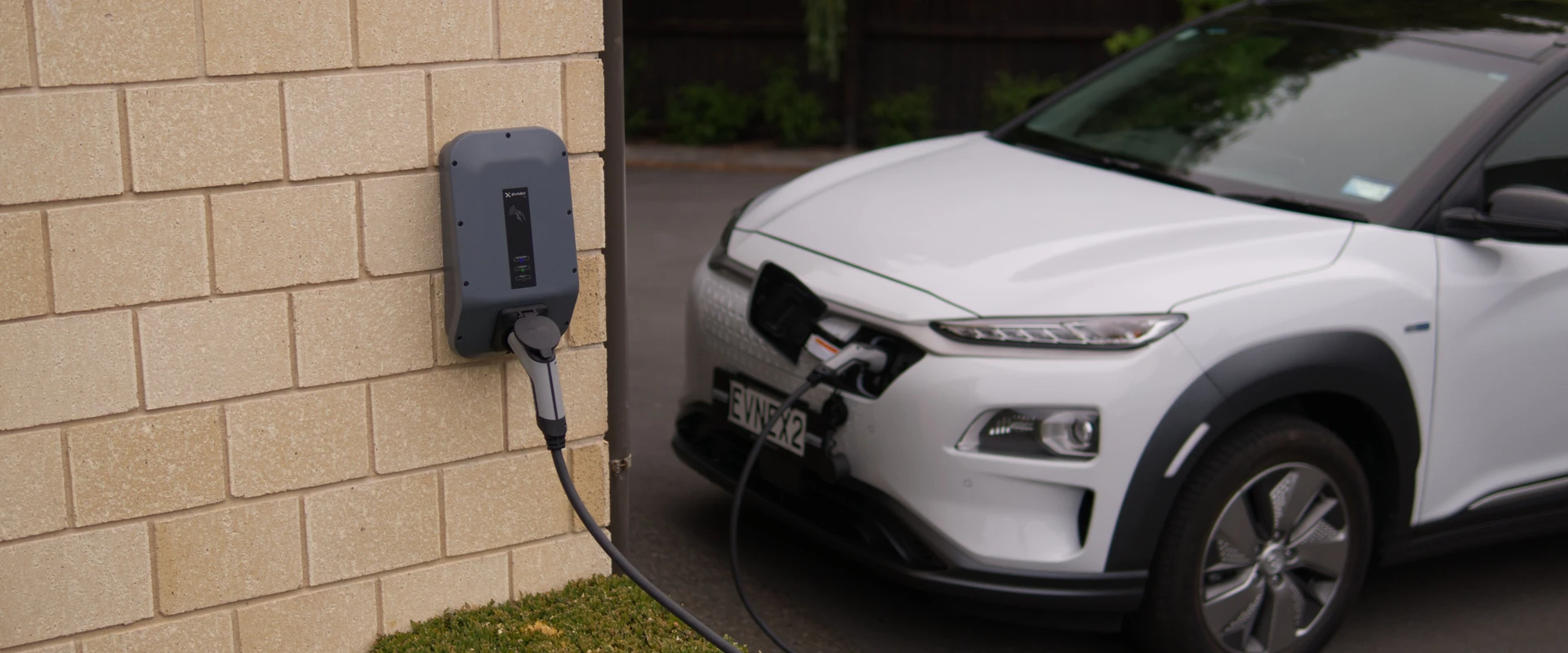
EV Charger Installation in New York
A Level 2 charger turns overnight charging from an inconvenience into something you stop thinking about. Pairing it with solar is where it gets interesting.
Why Level 2, and why alongside solar
A standard household outlet, what the industry calls Level 1, adds only a few miles of range per hour. That is fine for a plug in hybrid or a short commute, and frustrating for anything else. A Level 2 charger runs on a 240 volt circuit, the same kind of supply as an electric dryer, and typically fills a car overnight.
The reason to install one at the same time as solar is straightforward: both jobs touch your electrical panel, both may need a service upgrade, and both need permits. Doing them together avoids paying an electrician to do the same groundwork twice.
There is a second reason that matters more over time. Charging a car is often the single largest new electrical load a household adds, and it can materially change what size solar system makes sense. If you know an EV is coming, it is worth designing the array around it from the start rather than undersizing and adding panels later.
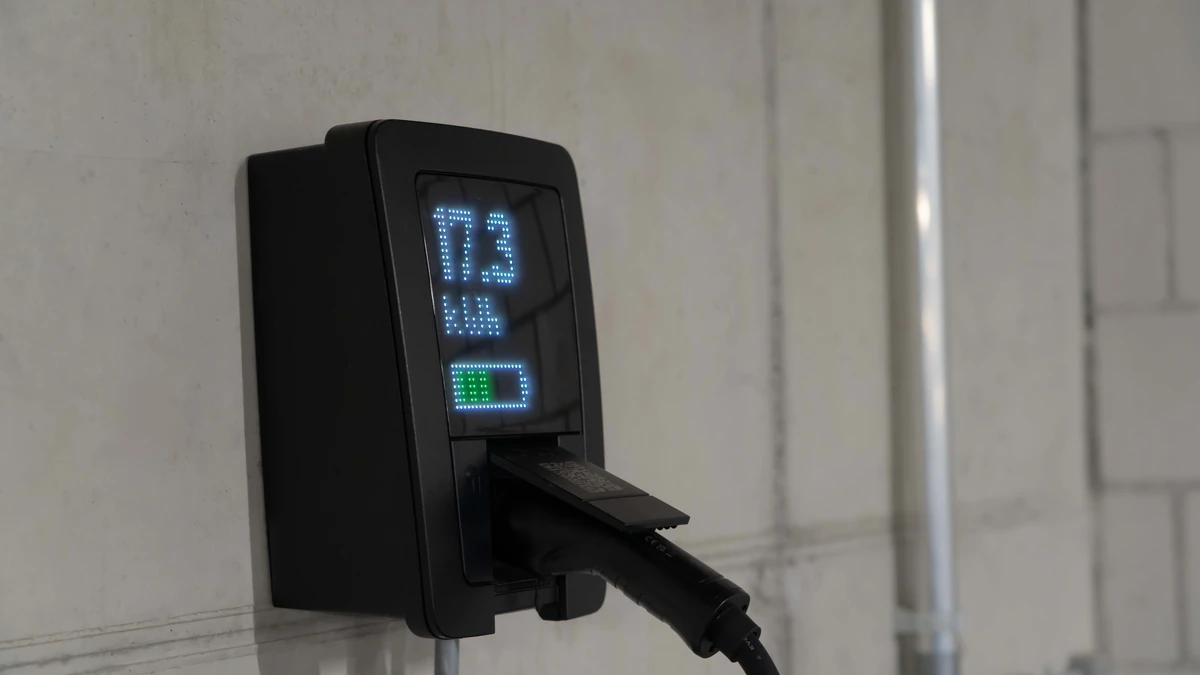
What an EV charger installation involves
- Panel capacity check. Whether your existing service can carry a 240 volt circuit at the amperage the charger needs. Older homes on 100 amp service often cannot without changes.
- Circuit run and mounting. Running the new circuit from the panel to wherever the car parks, and mounting the charger. Distance and whether the run is exposed or fished through finished walls drives much of the cost.
- The charger itself. Hardwired or plug in, and whether you want load management, scheduling or the ability to prioritise charging from your own solar production.
- Permit and inspection. EV chargers need an electrical permit and inspection in most New York municipalities.
- Load management, where needed. If your panel is close to capacity, a load managing charger can share a circuit with another large appliance and avoid a full service upgrade. This is often cheaper than upgrading.
What affects the cost
Distance from panel to parking
A charger on the other side of the house from the panel costs considerably more than one on the garage wall right behind it.
Whether you need a service upgrade
This is the single biggest variable. It can dwarf the cost of the charger itself, which is why the panel check comes first.
Finished versus unfinished walls
Running conduit through an unfinished basement or garage is quick. Fishing cable through finished walls and ceilings is not.
Indoor or outdoor
Outdoor installations need weather rated equipment and, depending on the run, trenching.
One car or two
If a second EV is likely, it is worth sizing the circuit and conduit for it now.
Three steps, and you can stop at any of them
Tell us about your property
Your address, roughly what you pay for electricity, and your roof type. It takes about a minute, and every question beyond the basics is optional.
We refer you to one installer
One company that works in your county and knows your utility's interconnection process. Not a lead pool, and not six companies calling you.
Free consultation and a written proposal
They assess your roof, your usage and your utility, then put numbers on paper. No obligation at any point, and no payment is ever taken through this site.
How to check any solar contractor
This is a new site with no customer reviews, so we are not going to show you any. What we can do is tell you exactly what to verify about whoever contacts you, and where to look it up. That applies to the installer we refer you to and to every other quote you get.
NABCEP certification
The North American Board of Certified Energy Practitioners is the industry standard credential for solar installers. It certifies the individual professional who holds it, not the company, so a firm advertising it may have one certified person and twenty who are not.
How to check. Ask which named individual holds it, then search that name in the directory.
Search the NABCEP directoryNYSERDA participation
Registration in the state's NY-Sun programme. This one is not a nice to have: the New York State incentive is only available through an approved contractor, so using an unregistered installer forfeits it. Some also hold the Quality Solar Installer designation, which requires at least 12 NY-Sun projects in the past year and an average of 4 out of 5 on NYSERDA's own field inspections.
How to check. Search the company name in NYSERDA's list before you sign anything.
Check NYSERDA's contractor listLicensing and insurance
Appropriate electrical licensing for the work, plus general liability and workers compensation cover. A contractor without workers compensation can leave you personally exposed if someone is injured on your roof.
How to check. Ask for certificates of insurance naming you, and check the licence with your town or county before work starts. Do not accept a policy number alone.
Local experience
Interconnection is where most New York solar timelines slip, and it is handled very differently by Con Edison, National Grid, NYSEG, RG&E and PSEG Long Island. Permitting varies again by town.
How to check. Ask how many systems they have energised on your specific utility in the past year, and for two addresses in your county you can drive past.
NY Solar Finder is operated by RBR Growth Consulting. We are not a solar installer, we hold no industry certification, and we do not guarantee the credentials of the company that contacts you. We name these standards, and link to the bodies that issue them, so that you can check that company yourself before you sign anything.
Questions we get asked about this
Broadly, it adds something in the range of twenty to forty miles of range per hour depending on the charger's amperage and what the car itself can accept. For most households that means the car is full every morning regardless of how it was driven.
You can, and for a plug in hybrid or a very short commute it is genuinely sufficient. For a full electric vehicle driven normally, Level 1 charging struggles to keep up.
Sometimes. Homes on modern 200 amp service usually have room. Older homes on 100 amp service often do not, though a load managing charger can sometimes avoid the upgrade. This should be checked before anything is ordered.
In effect yes, if you charge during daylight hours while the array is producing. Some chargers can be set to draw only from surplus solar. Charging overnight means drawing from the grid and offsetting it with daytime export credits instead.
If you know you want both, yes. The panel work, permits and electrician visit overlap, and knowing about the EV load lets the installer size the solar array properly.
Related reading
Find out what this would look like on your property
One local installer, one free consultation, one written proposal. Your details are never sold.