Solar Installation in Brooklyn, New York
Brooklyn is mostly attached rowhouses with flat roofs, which makes solar here a different engineering job from anywhere upstate. It also sits on the highest electricity rates in the state.
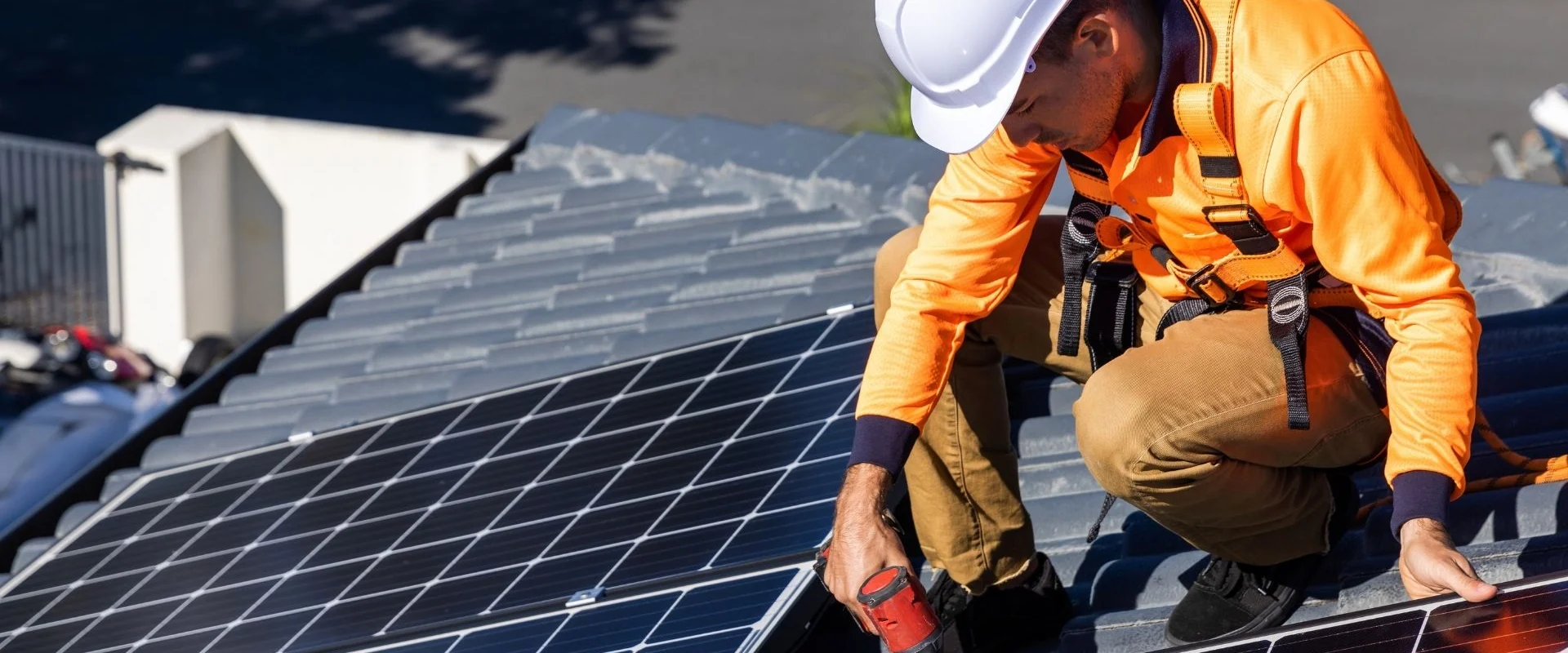
Solar in Brooklyn is typically installed on flat or low-slope parapet roofs using ballasted tilt racking rather than pitched-roof mounting. Con Edison rates are the highest in New York, which strengthens the economics, but fire access pathways and landmark district rules reduce usable roof area.
Flat roofs change everything
Most Brooklyn housing is attached rowhouse stock with a flat or very low-slope roof behind a parapet wall. Panels there are tilted on ballasted or mechanically attached racking rather than laid along a pitch.
That has consequences. Ballasted systems add weight, so roof structure has to be assessed. Tilted rows shade one another if spaced too tightly, so the array is spread out more than a pitched roof would need. And a parapet casts its own shadow across the lower part of the roof in winter.
Usable roof is smaller than total roof
Landmark districts are widespread
Brooklyn Heights, Park Slope, Fort Greene, Clinton Hill, Cobble Hill and many other neighbourhoods sit within landmark districts. That does not prevent solar, but it usually means the array must not be visible from the street, which on a flat roof behind a parapet is often achievable anyway.
Check your building's status before designing an array rather than after.
Why the economics still work
Con Edison rates are the highest in New York State. The value of a panel is the price of the electricity it displaces, so a smaller Brooklyn array can outperform a larger upstate one financially.
New York City also operates a property tax abatement for solar in addition to the state incentives. Terms have been amended several times, so have an installer confirm the current rules in writing.
Questions people ask about this
Usually yes. Flat parapet roofs take ballasted tilt racking. The constraints are roof structure, required fire access pathways which reduce usable area, and landmark district rules in many neighbourhoods.
Rarely outright. It typically requires the array not be visible from the street, which on a flat roof behind a parapet is often satisfied by default. Confirm your status before designing.
More than you would think, because fire access pathways and inter-row spacing on tilted arrays both consume area. Ask for usable square footage rather than total.
Con Edison territory produces the strongest solar economics in the state precisely because its rates are the highest. If a Brooklyn quote shows weak payback, question the assumptions rather than the concept.
How to check any solar contractor
This is a new site with no customer reviews, so we are not going to show you any. What we can do is tell you exactly what to verify about whoever contacts you, and where to look it up. That applies to the installer we refer you to and to every other quote you get.
NABCEP certification
The North American Board of Certified Energy Practitioners is the industry standard credential for solar installers. It certifies the individual professional who holds it, not the company, so a firm advertising it may have one certified person and twenty who are not.
How to check. Ask which named individual holds it, then search that name in the directory.
Search the NABCEP directoryNYSERDA participation
Registration in the state's NY-Sun programme. This one is not a nice to have: the New York State incentive is only available through an approved contractor, so using an unregistered installer forfeits it. Some also hold the Quality Solar Installer designation, which requires at least 12 NY-Sun projects in the past year and an average of 4 out of 5 on NYSERDA's own field inspections.
How to check. Search the company name in NYSERDA's list before you sign anything.
Check NYSERDA's contractor listLicensing and insurance
Appropriate electrical licensing for the work, plus general liability and workers compensation cover. A contractor without workers compensation can leave you personally exposed if someone is injured on your roof.
How to check. Ask for certificates of insurance naming you, and check the licence with your town or county before work starts. Do not accept a policy number alone.
Local experience
Interconnection is where most New York solar timelines slip, and it is handled very differently by Con Edison, National Grid, NYSEG, RG&E and PSEG Long Island. Permitting varies again by town.
How to check. Ask how many systems they have energised on your specific utility in the past year, and for two addresses in your county you can drive past.
NY Solar Finder is operated by RBR Growth Consulting. We are not a solar installer, we hold no industry certification, and we do not guarantee the credentials of the company that contacts you. We name these standards, and link to the bodies that issue them, so that you can check that company yourself before you sign anything.
Related reading
See what solar would look like on your roof
One local installer, one free consultation, one written proposal. Your details are never sold.